Neck pain, headaches and dizziness after a car collision: what they mean for your recovery
Understanding the symptoms that often follow a crash
A car collision can leave you shaken, even when the damage looks minor. In the hours or days after the impact, you may start to notice neck pain, a dull headache, or a feeling of dizziness that makes it hard to focus. These three symptoms often appear together and are frequently linked to whiplash - a soft-tissue injury caused by the sudden back-and-forth motion of the head during a crash. While most people associate whiplash with neck stiffness, the effects can spread well beyond the cervical spine. Recognising how these symptoms connect is the first step toward managing your recovery and understanding what to expect if you need to seek legal support.
Why neck pain, headaches and dizziness happen together
The mechanism of whiplash helps explain why these three symptoms cluster. When your vehicle is struck from behind or from the side, your head is thrown backward and then forward with force that the neck muscles cannot control. The soft tissues - ligaments, tendons and muscle fibres - stretch beyond their normal range, causing micro-tears and inflammation. That inflammation irritates the nerves in the upper neck, which are closely connected to the base of the skull and the vestibular system in your inner ear. The result is a headache that often starts at the back of the head and radiates forward, plus a sense of imbalance or spinning that can make everyday tasks feel difficult.
Dizziness after a collision is not always a direct result of the neck injury itself. Sometimes it comes from a mild concussion or a disturbance in the fluid of the inner ear caused by the sudden movement. Even without a direct blow to the head, the acceleration forces can affect the brainstem and the tiny crystals in the ear that help you keep your balance. This is why a person with whiplash may feel unsteady when turning their head quickly, looking up, or standing up from a chair. The combination of neck pain and dizziness can also make headaches worse, creating a cycle that is hard to break without proper care.
What to watch for in the first few days
Not every ache after a crash signals a serious problem. Many people find that their neck feels stiff the morning after the collision, and that a mild headache comes and goes. These symptoms often improve on their own within a week. But some patterns should prompt you to seek medical advice sooner rather than later. If the headache becomes severe and does not respond to simple rest or over-the-counter pain relief, or if the dizziness makes it hard to walk straight or causes vomiting, you may need an urgent assessment. Similarly, if the neck pain spreads into your shoulders or arms, or if you notice tingling or weakness in your hands, this could indicate nerve involvement that requires investigation.

A medical examination in the days following the crash is important for two reasons. First, it rules out more serious conditions such as fractures or damage to the discs in your neck. Second, it creates a record that links your symptoms directly to the collision. That record becomes valuable if you later decide to pursue a whiplash injury claim. Doctors will usually ask about the onset and progression of your symptoms, check your range of motion, and may order imaging if they suspect structural injury. Even if the scan comes back clear, soft-tissue injuries can still cause significant pain and reduced mobility for weeks or months.
The recovery period and what affects it
Recovery from whiplash varies widely from person to person. For some, symptoms resolve within two to four weeks with gentle movement and basic pain management. For others, neck pain, headaches and dizziness can persist for several months, especially if the initial injury was more severe or if treatment was delayed. Several factors influence how long symptoms last. Age plays a part - older adults tend to heal more slowly. The force of the impact matters too; higher-speed collisions generally cause more tissue damage. Pre-existing conditions such as arthritis or previous neck injuries can prolong the recovery period.
One of the most important factors, though, is how you manage the first weeks after the crash. Resting for more than a day or two can actually slow recovery by allowing muscles to stiffen further. Gentle movement, as advised by a physiotherapist or doctor, helps maintain circulation and prevents the neck from locking up. Heat packs can ease muscle tension, while ice packs reduce inflammation in the first 48 hours. Staying hydrated and keeping good posture when sitting at a desk or watching television also makes a difference. If dizziness is a problem, avoid sudden head movements and give your brain time to adjust when you change position.
Keeping a symptom diary
A symptom diary is a practical tool that many people overlook. Writing down what you feel each day - the type of headache, the level of neck pain, how often dizziness occurs and what triggers it - gives you a clear picture of your recovery pattern. It also provides evidence if your symptoms do not improve as expected. A consistent diary can help your doctor see whether the condition is stable, getting worse, or slowly resolving. If you later need to discuss your case with a legal professional, a diary adds weight to your account of the injury and its impact on your daily life.
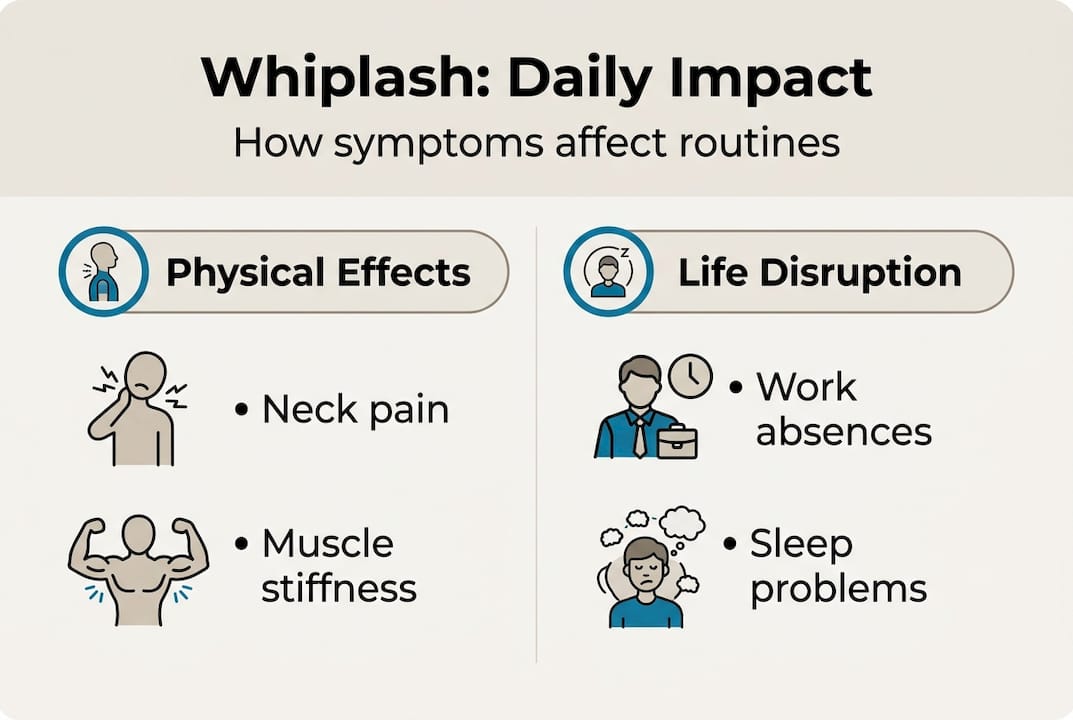
Your medical records will already contain some of this information, but they cannot capture the day-by-day variation that a diary can. Note things like whether the headache wakes you at night, whether you have missed work or social activities because of the dizziness, and whether everyday tasks such as driving or carrying shopping have become harder. These details matter because they show how the injury affects your quality of life, not just the clinical symptoms.
Linking the symptoms to a legal claim
If you are considering a whiplash injury claim, the three symptoms of neck pain, headaches and dizziness are central to the case. An insurer or legal representative will want to see evidence that these symptoms are genuine and that they stem from the collision. That is why the medical examination and the symptom diary are so important. They create a timeline and a clinical basis for the claim. The process does not require you to prove that the other driver was at fault - that is usually established by the police report or witness statements. What the claim focuses on is the injury itself and the losses it has caused, such as medical costs, lost earnings, or the need for help around the home.
In Scotland, the rules around whiplash claims have changed in recent years, with a greater emphasis on early medical evidence and a fixed tariff for certain injuries. But the basic principle remains the same: you need to show that the collision caused your symptoms and that those symptoms have had a real effect on your life. Neck pain and headaches are common, but when they are accompanied by dizziness and reduced mobility, the impact can be significant. A legal advisor who specialises in this area can help you understand what evidence is required and how to present your case clearly.
When to seek professional help
If your symptoms persist beyond a few weeks, or if they are severe enough to stop you from working or driving, it makes sense to see a healthcare professional and also to speak with a solicitor who handles personal injury cases. Do not assume that time alone will fix the problem. Some whiplash injuries develop into chronic conditions if not managed properly. Early treatment - whether that means physiotherapy, gentle exercise or pain management - can shorten the recovery period and reduce the long-term effects.

At the same time, the legal side of things does not have to be complicated. Many firms in Scotland offer no win no fee arrangements, which means you can explore your options without worrying about upfront costs. The key is to act within the time limits that apply to personal injury claims in Scotland, and to have your medical records and symptom diary ready. A clear link between the collision and your ongoing neck pain, headaches and dizziness is the foundation of any successful claim. Taking care of your health first, and documenting what happens along the way, puts you in the strongest position for both recovery and any legal process that follows.
Ends · THECLAIMSNOTEBOOK